.jpg)
The Military School of Vörå
- a glorious part of the history of Vörå.
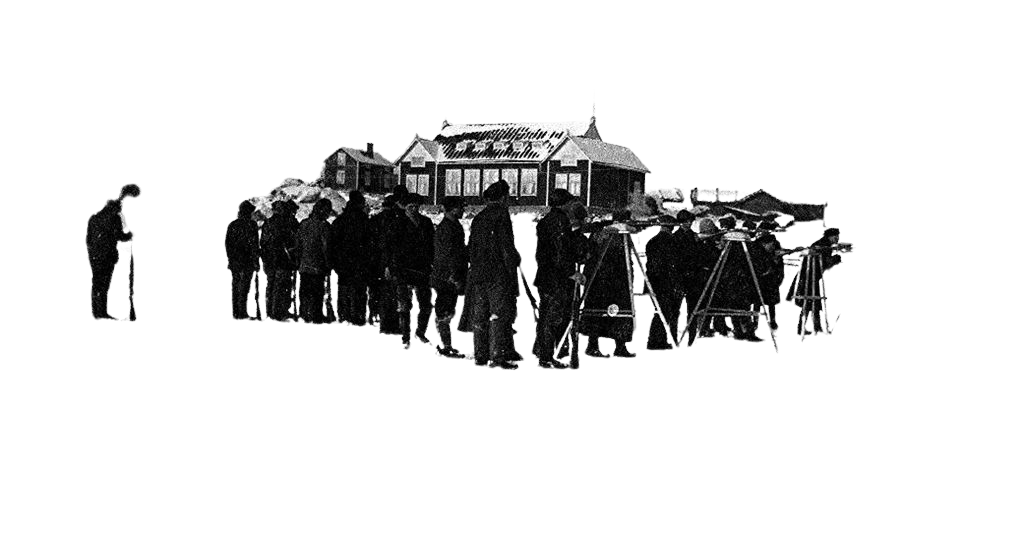
The Military School of Vörå had started at the end of January and youths
from all over Finland trained their war skills on a field at the foot of the
hall of young people youth hall and east of the prayer house. The Maxim
machine gun shooting practice was arranged by the river. Normal rifle
shooting was practiced by Baggberget, where the ski jump tower is located
nowadays. The Russian camp, including about 70 soldiers, was situated
only 15 km north.
The locals were suspicious about what the foreign youths were doing and
some of the locals withdrew their fonds assets from the bank.
Background
At the end of the year 1917 everybody realized Finland was close to civil war.
Finland had proclaimed its independence on 6 of Decamber 1917, approved by
Russia, but the Russian soldiers staying in Finland, did not seem to move away.
Instead, they started cooperating with the Red Guard, which was a result of the
rise to power by Lenin. Murders and other acts of violence became more and
more common and the White Guards, or fire departments as they first were
named, were established during the summer and autumn of 1917, to protect the
security in the municipality. There was a big lack of weaponry, but the situation
had improved in October 1917 when the ship Equity brought weapons to the
coast. However, the lack of trained military leaders remained. Most young men
had refused to join the Russian army in the last years belonging to Russia and
boycotted the Russian mobilisation for the latest decades. The commanders to be
called Jägers, were still trained in Germany. The Jägers were Finnish volunteers
and freedom fighters trained in Germany in 1915-1918.
The Military School of Vimpeli rapidly trained officers.
The Active Committee (AC) and The Military Committee (MC) in Helsinki
secretly started and financed a Military school in Vimpeli during the Christmas
of 1917 to educate, first and foremost, platoon leaders (officers) for the White
Guards. The education was mainly for students in the upper high school classes.
Teachers were some Jägers, who had already secretly returned to Finland from
Germany in December. The superintendent and theory teacher at the school was
Major General Paul von Gerich, who like Mannerheim received his military
training in Russia. The Jäger Aarne Sihvo and Juho Heiskanen were the
company commanders. The school educated about 200 youths in two
companies during 26 December 1917 - 13 December 1918.
The Military School of Vörå educated non-commissioned officers.
The education in the Vimpeli School of Military was found so successful that
the student Sven Donner went to Helsinki to ask for money from MC to arrange
a new course. MC welcomed the idea and gave the adjutant, medical student
Axel Bergman, the mission to organize a new school.
For the location they wanted a municipality with:
- the possibility to accommodate students
- enough food and horses
- good communication and close enough to the railway
- “white” enough population and not having one of the bigger Russian garrisons
close.
Lapua was the first alternative, but too many Russians were situated there. The
activist, schoolmaster Thure Svedlin from Munsala and Axel Bergman from
Vaasa were very familiar with Vörå and according to old sources, Vörå was their
suggestion. After paying a visit to the Chairman of the municipal council,
Johannes Miemois, and co-operative trading director and also chairman of the
People´s Welfare Board in Vaasa in the middle of the night, Vörå was elected the
right location to be.
The school was to educate squad leaders for the White Guards, those that at the
same time were declared the official army of Finland and general C G E
Mannerheim, who recently returned home from the Russian Revolution, became
the commander of the Finnish Army. The school was about to start 26 January
1918. “Passports” signed S 1 were sent to the White Guards around the country,
requesting to send some of their best men. But the rumour about the passports
had already spread and on January 1918 almost 150 men from Savonia arrived
in the railway station of Tervajoki, asking for directions to Vörå. According to
this the school had a flying start and Aarne Sihvo was named commanding
officer of the school in Vörå, but he was sent to Karelia when the war broke out.
Fighter Lieutenant Bertel Petrelius (later Perttu Pertamo) was also sent to Vörå.
Sihvo asked Petrelius to take over the leadership of the school. Already earlier
the Jägers Albert Rosenholm, Ivar Hasselblatt and Kaarlo Viljanen had arrived
in Vörå. Also, some of the students and teachers from Vimpeli stayed on as
trainers in Vörå. Infantry Captain Juho Heiskanen became the leader of the
school on 18 February, but he spent most of his time fighting the war at the
frontier, while Petrelius stayed in Vörå.
The Military School of Vörå – during the war of liberation
Mannerheim decided that the Russian troops should be disarmed already during
the night between January 27 and 28 1918. His headquarters had been moved to
Nikolainkaupunki (Vaasa) a while ago. The senate was also moved there, and
the name of the town was changed back to Vaasa and now considered the capital
city in Finland since the Red Guards had occupied south of Finland.
Mannerheim travelled from Vaasa by sledge through Petsmo and Maxmo and
came incognito to Vörå on January 27 to check the school before discharge. The
military school was commanded to Ylistaro to disarm a pretty big Russian camp,
along with the White Guards of Lapua and Ylistaro. When they had left,
Mannerheim, unknown to the inhabitants of Vörå, walked around inspecting the
local White Guards, who were getting in line to move to Vaasa. He asked them
to spare ammunition. Herman Kamis said to his son: Who is that man?
Somebody should ask why he is here!
Mannerheim then left for Ylihärmä, where he temporarily established his
headquarters. When he left, he assigned staff member Walter Holmberg to be the
liaison officer.
The number of students in Vörå at this time was only about 450 soldiers divided
into 3 companies, out of which the 2nd company was Swedish speaking, and
furthermore a machine gun company lead by Albert Rosenholm (Lauri Grahn
during the war). After only a few days of education they were sent to fight.
Some of the students only had time for a test shoot, east of Grannasberget before
leaving for battle. The farmers of Vörå made more than 100 horse carriages to
Ylistaro. After disarming the Russians in Ylistaro they kept on under the lead of
Viljanen to Ilmajoki and Kristiinankaupunki. The others went to Oulu together
with Vaasa White Guard under the lead of Petrelius and Grahn. Some weeks
later the Oulu troop returned and another two weeks later the rest of the soldiers
returned, too.
This was followed by a more peaceful time from 19 February to 10 March. New
students arrived all the time and the “old” ones, in the first to third company,
were sent to the battlefront or to their native place to teach more young men to
become soldiers. During this time the fourth company of the Military school of
Vörå was filmed. The episode can be found on the internet. Right before the
offensive of Tampere in the middle of March, the whole school was sent to the
frontline under the name Vörå battalion led by Heiskanen and Petrelius. Only
the ninth company, mostly with men from Nystad, who took a detour though
Sweden, and arrived last into Vörå, stayed for another while to be educated, but
they too attended the battle of Tampere.
Originally the school was planned to educate 20 students for three weeks, but
the result was 1400 students (according to Vasabladet, a local newspaper, in
1918 1600 men) for 13 weeks. The school in Vörå ended its activities on 12
April, after the invasion of Tampere, when Mannerheim dismissed the school,
upgraded the students to non-commissioned officers and sent them home to their
own troops. In his speech on the ice of Iidesjärvi Mannerheim called the Vörå
battalion the Vörå Guard (Vöyrin kaarti) and the students The Boys of Vörå
(Vöyrin pojat) – a name still used.
Further education of non-commissioned officers.
Some of the Vörå students were commanded to do officer´s education in
Mikkeli, where also Mannerheim moved his headquarter for a short time. The
school continued from April 25 to June 28 1918, as the Vörå school II in
Helsinki in the girls’ school of Yrjönkatu with Bertel Petreluis teaching about
500 students. After this the non-commissioned officer´s education continued
first in Sortavala and later in Vyborg (Markovilla) and finally in Lappeenranta,
where there still is a room called The Vörå ward. The latest school to be
influenced by the Vörå school is the Field school. There you can find a Vörå
Hall and a Tradition room of Vörå Military school.
After the war, Mannerheim honoured the Ostrobothnian soldiers by letting the
Vaasa Guard march in front of the victory parade in May in Helsinki.
Furthermore, he established Vaasa, Lapua and Vörå battalions in the Finnish
White Guard. However, these names later disappeared during reorganisations,
but in Helsinki there was a unit called the Vörå Guard at least until 1939.
Mannerheim, the honorary commander of the Vörå Guard, wore the only course
badge in gold on his chest, above all other honorary decorations.
Vörå made a glorious effort in the war of liberation (war of independence) and
the school is very well known in the Finnish speaking areas of Finland.
Eino Leino: Vöyrin Sotakoulu. Interviews and history . Minerva (1918)
Väinö Seppä: Vöyrin Sotakoulu 1918 – Including a student register. Otava (1960)
Gunnar Strengell: Det Fria Finlands Förkämpar (1998) Personal memories.
Emil Helle: a non-published manuscript
Local stories and wartime diaries.
Facts about the school:
Operating time: 26.1. – 12.4.1918
The planners of the school: Sven Donner, Axel Bergman, Thure Svedlin
Local organizers: Johannes Miemois, Johannes Hallvar, Jacob Tegengren
Staff: The first commander of the jägers Bertel Petrelius, Helsinki and since 18.12
Jäger Juho Heiskanen. Pielisensuu
Intendant: Jäger Ivar Hasselblatt, Vaasa
Boss of purchase: Johannes Hallvar, Vörå
Clerk: Jäger Viktor Granlund, Vasa
In total 26 Jägers acted leaders, commanding officers and instructors/trainers
Office and headquarters: Mickel Ollus (scribes’ grandfather) cottage by the hall of
the municipality
Lecture hall: Koskeby Youth Hall
Number of students: About 1400 (All were not registered)
Companies: 9 and 2 machinegun companies
Call-outs: 1) 27.1.-5.2. Ylistaro – Oulu
2) 27.1.-19.2. Ylistaro – Ilmajoki – Kristiinankaupunki – Filppula – Ruovesi
3) 10.3.-9.4. Vaskivesi – Ranta – Tyrkkö – Lahteenmäki – Kuru – Korkeamäki
– Teisko – Sorila – Takahuhti – Pyynikki – Messukylä – Tampere
At the same time education of new men kept on in Vörå.
Accommodation: In almost every house in the middle and south of Vörå. At most
there was about 750 students in Vörå between the second and third call-out.
Catering: The places where to eat were in Nordbergs, in Koskeby UF:s premises,
in the courthouse of Mäkipää.
The schools in Andkil and Rejpelt, the farmhouse by old Framnäs pharmacy och
by Hanna Grannas close to Grannasberget, a hill.
The officers ate in the upper floor of the Cooperative Bank, where Jacob
Tegengren lived.
Vörå delivered during this time twice as much food to the state as all of the
province of Vyborg.
The Lotta Movement, Chief housekeeper – as in Vimpeli - was household teacher
Katri Huldén. She was called the first woman in the Lotta movement in Finland
and followed “her boys” to the war in March together with Mia Murkais and other
women from Vörå.
”Industries” according to the School of War: Two bakeries, cobbler shop,
dressmaker, meat smokers etc
Horse lifts: During all the war school time, the farmers gave the students and the
white soldiers lift by their horse carriages to and from the railway station of
Tervajoki (24 km). When the last call-out took place they were using 300 horses at
the same time.
Successful military persons: Five students became generals: E A Estola (vet), Yrjö
Hanste, Ilmari Karhu, Aaro Pajari, Arvo Saloranta, and furthermore the leaders of
the school Jäger Juho Heiskanen and Jäger and teacher Kaarlo Viljanen.
Fourteen became colonels: Lauri V Fagerström (med), T S Hiiskero (Hedman), H V
Hirki, Yrjö Järvinen, Bror Kraemer, Jarl Christian Olin, A Peltonen (med), Yrjö
Pöyhönen, Kosti J Saurio, Otto Snellman, Per R Sundman, Yrjö Tuompo, Urho
Tähtinen, Runo Viberg, and furthermore the first leader of the school Jäger Bertel
Petrelius.
Famous students: Foreign minister Eljas Erkko, Iron master Sven Fazer, artist
Jorma Gallén-Kallela, Chief executive Heikki Reenpää, Professor Heikki Järnefelt,
Lawyer Bruno Kivikoski, ministers, ambassadors, etc.
Honor march: Vöyrin Marssi (The March of Freedom) Lyric: Eino Leino Music:
Leevi Madetoja*
Until now unknown march: Vörå Pojkarnas Marsch. Lyrics and music: Agnes Tschetschulin.
In the archives you can furthermore find a walse written by the student Kaarlo
Mikkolas Vöyrin valssi eli Kentälle jääneet (The walse of Vörå also called Those
who were left in the battlefields)
Film: www.vapaussota.com under Filmit 1, live pictures from the exercise of the
the 4 th company in a snowy field in Vörå.
Facts:
The students came fr from 370 different municipalities. Below you can see their allocation among the counties
County / Number / %
Vaasan / 364 / 28%
Turun-Porin / 180 / 14%
Oulun / 161 / 12%
Viipurin / 156 / 12%
Kuopion / 134 / 10%
Uudenmaan / 124 / 10%
Hämeenmaan / 88 / 7%
Mikkelin / 81 / 6%
Foreign countries / 14 / 1%
Sum: 1302 / 100%
Earlier education among the students:
Elementary school 48 %
Secondary school 30 %
Graduated from college 22 %
The parent´s profession:
farmer 45,5 %
businessman 20,0 %
civil servant 16,2 %
craftsman 7,6 %
official holder 5,7 %
worker 5.0 %
The average age of the students: 22 years 9 months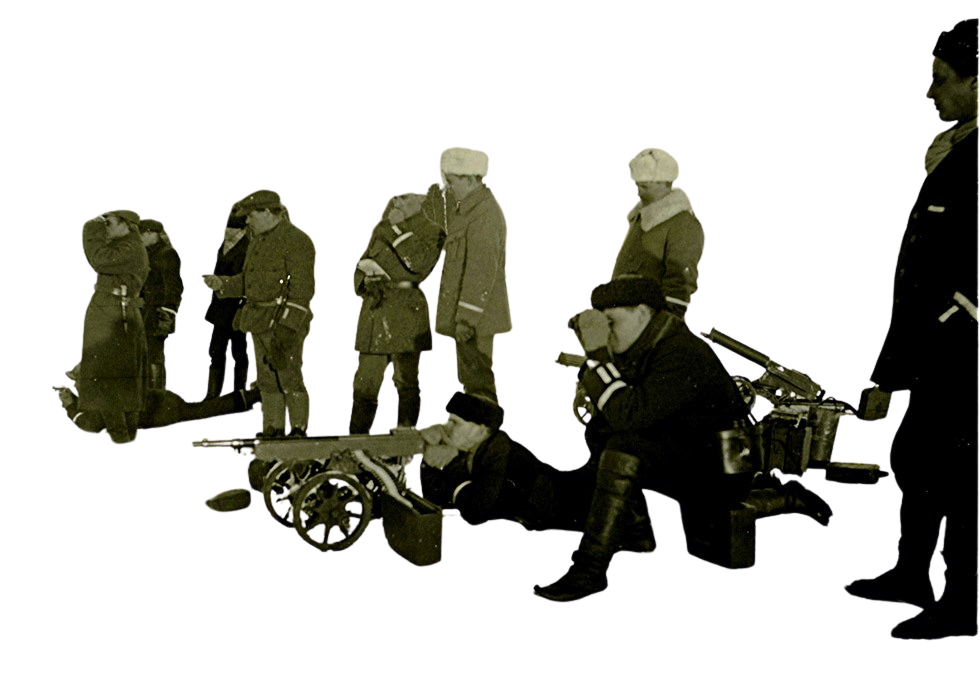
Film: www.vapaussota.com under Filmit 1, live pictures from the exercise of the
4 th company in a snowy field in Vörå.
Text: Margareta Ehrman
Photos: Margareta Ehrman´s private archive
Translation: Britt-Marie Norrgård
N.B. Jägers were also called Jaeger Soldiers. Jääkäri (Jäger) originally refers to
volunteers that received military training in Germany between 1915 and 1918. Later
it became a rank for a light Infantry Private.